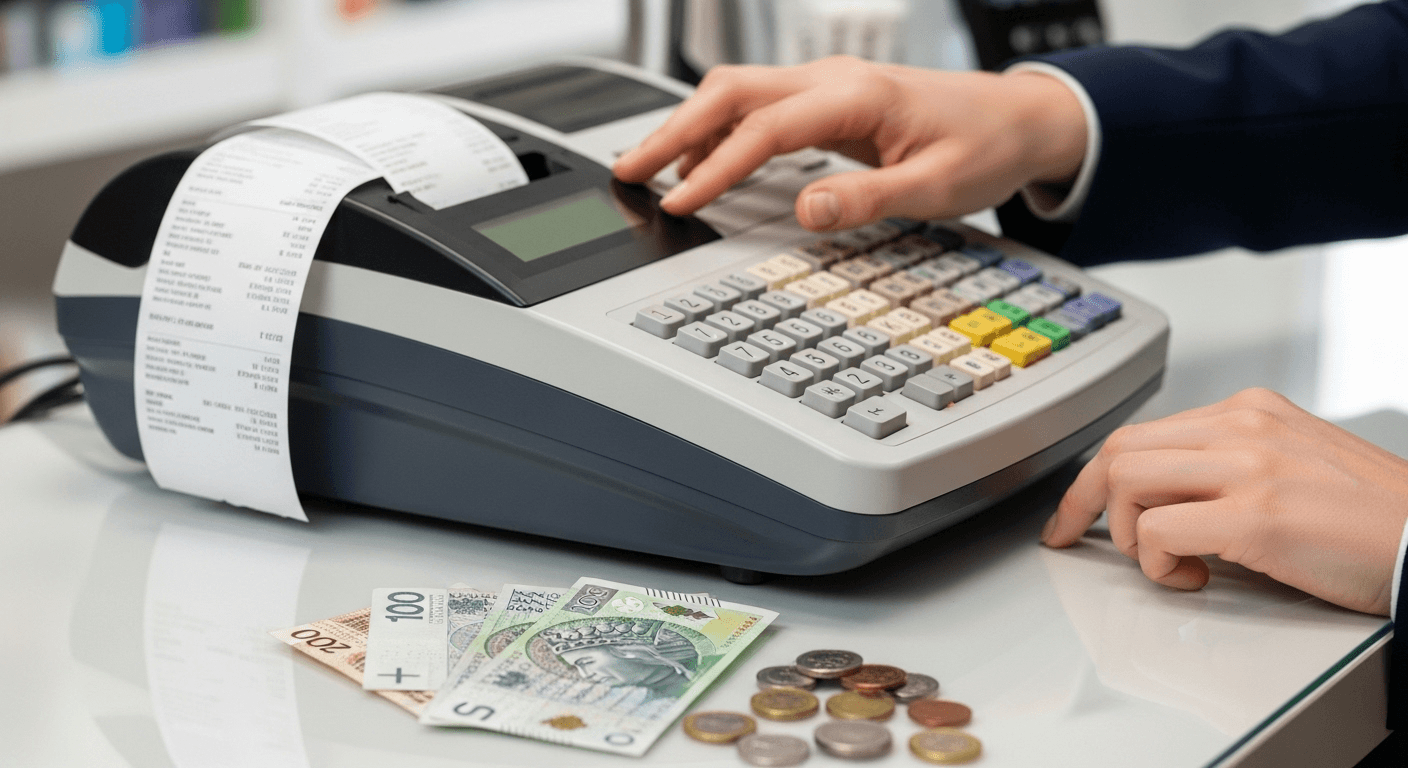
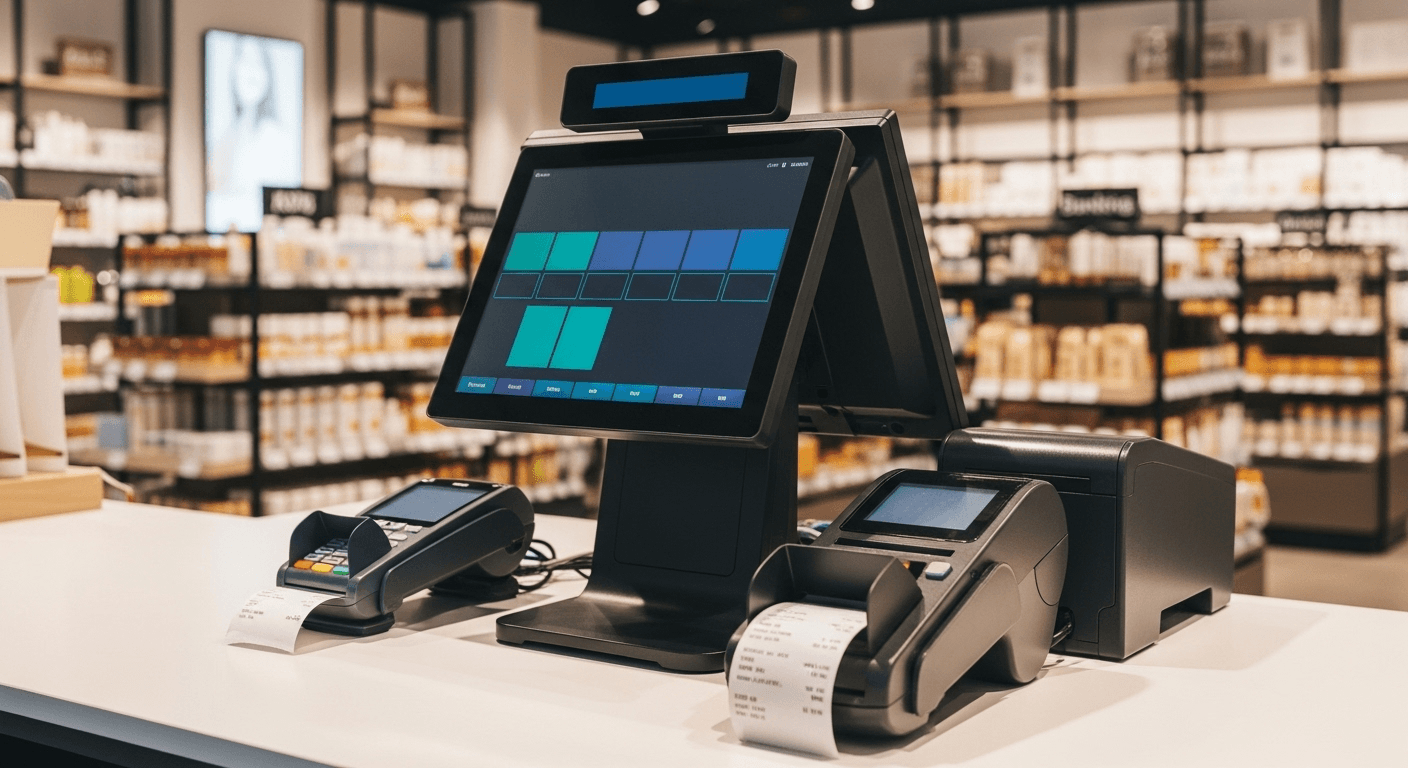
Running a business with several cash registers (kasa fiskalna) requires particular care when settling VAT and preparing JPK_VAT files (JPK_V7 – VAT return with records, SAF-T file). Taxpayers often wonder how to record sales from different cash registers correctly and which documents should form the basis of the VAT records. The issue is especially important because of the obligation to submit monthly JPK_VAT files, which must contain complete and correct data on the sales made.
Settling sales from several cash registers involves a number of practical challenges that business owners have to deal with in their day-to-day accounting. Remember that each cash register generates its own fiscal reports, which then have to be properly included in the VAT records. A wrong approach can lead to errors in tax settlements and potential problems with the tax authorities. The reports also include receipts issued when an advance payment is received.
Data from sales recorded on a cash register must be reported in the JPK_VAT file in order to determine the basis for calculating output VAT for the given settlement period. This obligation applies to all VAT taxpayers who sell using cash registers, regardless of how many devices they have
Current tax rules provide for different ways of recording sales from several cash registers, giving taxpayers some flexibility in choosing the settlement method. At the same time, every solution adopted must comply with the applicable regulations and ensure that VAT is settled correctly. A proper understanding of the rules on fiscal reports and how to include them in the tax records is essential here.
Obligations related to cash registers and reports
The basic obligations related to recording sales on cash registers derive from the VAT Act. Under Article 111(1) of the VAT Act, the obligation to record sales on a cash register applies to all taxpayers who sell to certain buyers. This group consists mainly of private individuals who do not run a business and flat-rate farmers.
The key criterion for the obligation to use cash registers is the status of the buyer of the goods or services supplied by the taxpayer. This means that if the buyer of a given service or goods is someone other than the persons listed in Article 111(1) of the Act, that sale is not covered by the obligation to record it on a cash register at all. In practice, sales to other businesses can be settled solely on the basis of the invoices issued.
Under Article 111(3a)(8) of the VAT Act, taxpayers must use cash registers to issue documents other than receipts (paragon) relating to sales or to the operation of those registers. This obligation covers all types of fiscal reports generated by cash registers during their use
Detailed rules on documents issued with cash registers can be found in the regulation on cash registers (since 1 July 2025, the Regulation of the Minister of Finance of 25 June 2025, Journal of Laws (Dz.U.) 2025, item 845). Under § 6(1)(3) of that regulation, taxpayers who keep records must issue a daily fiscal report after the end of sales for a given day, no later than before the first sale on the following day. This is the basic document confirming the turnover achieved on a given calendar day.
In addition, taxpayers must issue periodic fiscal reports, i.e. monthly reports, after the end of sales for a given month. The deadline for issuing such a report is the 25th day of the month following that month. Online cash registers can issue a combined periodic fiscal report instead of the standard monthly report, which can make settling sales from several registers easier.
Online cash registers and additional obligations
Taxpayers using online cash registers are subject to similar, though somewhat broader, obligations to generate fiscal reports. Under § 20(1) of the regulation on cash registers, taxpayers who keep records on an online cash register issue a range of report types with different forms and purposes.
The basic documents generated by online cash registers include daily fiscal reports in electronic form, which are sent automatically to the Central Repository of Cash Registers (Centralne Repozytorium Kas). These reports allow the tax authorities to monitor turnover on an ongoing basis and are an integral part of the cash register control system. At the same time, taxpayers have to generate periodic fiscal reports, including monthly ones, in paper form for their own record-keeping needs.
Online cash registers also generate settlement fiscal reports in paper form, combined periodic fiscal reports and combined settlement fiscal reports in paper form. In addition, the system provides for event fiscal reports in paper form, which document special situations in the operation of the register
The regulation also contains a precise definition of the individual types of fiscal reports. Under § 2(29) of the regulation, all types of fiscal reports – daily, periodic, monthly, settlement or combined – are documents containing summary data on the value of sales and the amount of tax broken down by individual tax rates. These reports also include the value of VAT-exempt sales for the given day, a chosen period or the entire period of the register's operation, respectively.
What matters is that reports can be full or abbreviated, but in every case they must contain complete data allowing VAT to be settled correctly. Taxpayers running a business with several online cash registers can use combined fiscal reports, which greatly simplifies recording sales in the tax records.
- Issue a daily fiscal report after the end of sales for the given day
- Prepare the monthly fiscal report by the 25th day of the following month
- Archive all fiscal reports in line with the rules
- Enter the data from the reports into the VAT records
- Prepare the JPK_VAT file on the basis of the data collected
Legal basis for VAT records and JPK
The obligation to keep VAT records and submit JPK_VAT files derives from Article 109(3) of the VAT Act. Under this provision, taxpayers, except those performing only VAT-exempt activities, must keep records containing data that allow the tax to be settled correctly and the recapitulative statement to be prepared.
These records must contain detailed data on the type of sale and the taxable amount, the amount of output VAT, including corrections of output VAT, broken down by tax rate. Equally important is information on the amount of input VAT reducing output VAT, including corrections of input VAT, as well as data on contractors and on sales and purchase documents.
Under Article 109(3b) of the VAT Act, taxpayers must send the records together with the tax return to the tax office (urząd skarbowy) for each month by the deadline for filing that return. They are sent electronically in line with the rules set out in the regulations
All registered active VAT taxpayers must submit JPK_VAT, regardless of the size of their business or the form of taxation used. The Regulation of the Minister of Finance, Investment and Development of 15 October 2019 on the detailed scope of data contained in tax returns and in records for VAT (Dz.U. 2019, item 1988, as amended) introduced a file combining the information that used to be submitted separately.
The current JPK file for VAT purposes must contain a range of information on supplies of certain goods and services provided, with the appropriate markings, as well as markings of sales and purchase documents. The correct marking of documents from cash registers, which have their own specific codes in the tax records system, is particularly important here. From the settlement for February 2026, the file (JPK_V7M or JPK_V7K) also contains the KSeF (National e-Invoicing System) number of the invoice, and documents without this number are marked OFF, BFK or DI.
Source documents for cash register sales
Under § 10(1)(8) of the JPK_VAT regulation, the records must contain data that allow output VAT to be settled correctly. For sales from cash registers, these are the values of sales excluding tax (net) and the amount of output VAT, broken down by tax rate, as well as VAT-exempt sales, derived from the summary sales documents from cash registers.
The correct marking of documents in the VAT records is essential. Under § 10(5) of the regulation, the records must contain the appropriate markings of sales documents. Summary sales documents from cash registers are marked "RO". The other markings are "WEW" for internal documents and "FP" for invoices issued for receipts, referred to in Article 106h(1) of the Act (they are entered in line with Article 109(3d) without increasing sales). Since 1 February 2026 the provision also provides for markings of invoices without a KSeF number (OFF, BFK) and the DI marking for a document other than an invoice. The moment of recording on the register itself raises doubts, for example when a customer pays by transfer after hours.
Sales recorded on a cash register must be included in the VAT records on the basis of the daily or monthly fiscal report, according to the ruling of the Director of KIS (National Tax Information) of 5 September 2024. Such a report is marked in the sales register as a document with the symbol RO, regardless of the number of cash registers held
The issues involved in recording sales on several cash registers were analysed in detail by the Director of KIS in an individual tax ruling (KIS) of 5 September 2024 (No. 0112-KDIL3.4012.493.2024.1.EW). The ruling stresses that entering the fiscal report as "RO" is mandatory regardless of whether the taxpayer records sales on a cash register because the law requires it or because the taxpayer decided to do so.
In both cases, sales recorded on a cash register are settled on the basis of the register report. This means that even if a taxpayer has no statutory obligation to use cash registers but has decided to use them, sales must still be settled in line with the rules on cash registers and the relevant documents must be marked "RO".
| Document type | Marking | Description | Use |
|---|---|---|---|
| Summary document from cash registers | RO | Daily/monthly fiscal report | Sales from cash registers |
| Internal document | WEW | Internal company document | Internal operations |
| Invoice for a receipt | FP | Invoice under Article 106h(1) | Invoice for a sale already included in RO |
Methods of recording sales from several cash registers
Taxpayers selling through several cash registers can choose between different methods of recording these sales in the tax records. The choice depends on the nature of the business, the number of registers and the owner's organisational preferences. All methods comply with the law, provided the appropriate procedures and markings are followed.
The first method is to record sales from each cash register separately, on the basis of separate fiscal reports generated by each device. In this case each register generates its own monthly report, which is then entered into the VAT records as a separate summary document marked "RO". This approach gives detailed control over the turnover of each register and can be particularly useful for registers located in different places. A separate question is whether the sale of fixed assets has to go through the register.
In the light of the ruling of the Director of KIS, it is compliant with the regulation to add up the values from the monthly reports of all cash registers and cover them with one RO summary document. At the same time, it is stressed that this is a right, not an obligation, of the taxpayer, which means flexibility in choosing the recording method
The second method is to record sales from all cash registers jointly in one summary document. In this case the taxpayer adds up the values from the monthly reports of all cash registers held and enters one summary document marked "RO" in the VAT records. This document covers the value of sales excluding tax (net) and the amount of output VAT, broken down by tax rate, as well as VAT-exempt sales.
The choice between these methods should take into account the practical side of bookkeeping. Separate documents for each register can be useful when the business operates in different locations or when detailed analysis of the turnover of individual points of sale is needed. A single joint document, on the other hand, simplifies bookkeeping and can be more efficient with a larger number of cash registers.
- Separate RO documents for each cash register
- One joint RO document for all registers
- The option to change the method during the tax year after agreeing it with your accountant
- The need to apply the chosen recording method consistently
- The obligation to archive all fiscal reports regardless of the method chosen
Practical aspects of settlement in JPK_VAT
Preparing a JPK_VAT file on the basis of sales from several cash registers requires particular care when collecting and processing data. Whatever recording method you choose, all data must be correctly calculated and entered in the appropriate items of the tax return. Assigning turnover to the right tax rates and calculating output VAT correctly is essential here.
If you use separate documents for each register, you must add up all the values before entering them in JPK_VAT. This means that although separate records are kept for each register, the JPK_VAT file will show the total value of sales from all cash registers. This is consistent with the logic of the tax return, which presents aggregated data for the whole settlement period.
Sales from several cash registers require the summary documents on which the sales entries are based to be specially marked with the RO code. This code must be used regardless of whether the taxpayer records sales from each register separately or combines all registers in one summary document
Particular attention should be paid to settling the different tax rates that may occur in sales recorded on cash registers. Modern cash registers can be programmed with different VAT rates, which means that a single fiscal report can contain sales taxed at 23%, 8% and 5% as well as VAT-exempt sales. All these values must be correctly assigned to the appropriate items in the JPK_VAT file.
The JPK_VAT preparation process should also include checking the accuracy of data from cash registers. It is advisable to compare the control totals from the fiscal reports with the data entered in the accounting records to rule out copying or calculation errors. It is particularly important to check that the total output VAT shown in the fiscal reports matches the amount entered in the tax return. We prepare VAT records from register sales and JPK_V7 files for clients as part of our accounting service.
Practical example: A business owner runs a grocery shop with three cash registers. The first register records sales of food taxed at 5%, the second handles sales of drinks and other products at 23%, and the third is used to sell newspapers and magazines at 8%. At the end of the month the owner generates monthly reports from each register, adds up the turnover by tax rate and enters one RO summary document in the VAT records, which then forms the basis for completing JPK_VAT.
Control and archiving of documents
Keeping correct records of sales from several cash registers requires appropriate control and archiving procedures. Taxpayers must ensure that all fiscal reports are generated on time, stored properly and available for inspection by the tax authorities. It is particularly important to keep documents in chronological order and to be able to reconstruct how sales were recorded.
The basic element of the control system is regular generation of daily and monthly fiscal reports from all cash registers. Daily reports should be generated every day after the end of sales, as required by the regulation on cash registers. Monthly reports must be generated by the 25th day of the following month and form the basis for settling VAT.
Fiscal documents are archived under the general rules on keeping tax documents. This means that all fiscal reports, both daily and monthly, must be kept until the limitation period for the tax liability expires (Article 112 of the VAT Act), i.e. as a rule for 5 years from the end of the calendar year in which the tax payment deadline passed. These documents must be stored in a way that keeps them legible and intact throughout the archiving period.
If you use online cash registers, you have access to electronic copies of fiscal reports stored in the Central Repository of Cash Registers. Nevertheless, it is advisable to keep your own archive of fiscal documents as well, to ensure continuous access to accounting data
Particular attention should be paid to protecting fiscal documents against loss or damage. For traditional cash registers, where reports are generated only on paper, it is advisable to make backup copies or scan the documents. Online cash registers offer greater data security thanks to automatic archiving in the central system, but paper reports still need to be stored locally.
The control system should also include regular checks that data from cash registers matches the entries in the VAT records. A monthly comparison of the control totals from fiscal reports with the values entered in the accounts is recommended, as it allows errors to be detected quickly and corrected before the tax return is filed.
- Generate daily reports from all cash registers
- Prepare monthly reports by the 25th day of the following month
- Check the control totals from the fiscal reports
- Enter the data in the VAT records with the RO marking
- Archive all fiscal documents until the limitation period expires (as a rule 5 years from the end of the year in which the tax payment deadline passed)
- Prepare and submit the JPK_VAT file by the statutory deadline
The most common mistakes and how to avoid them
In practice, taxpayers make various mistakes when settling sales from several cash registers, which can lead to problems with the tax authorities. The most common mistake is marking documents incorrectly in the VAT records or omitting sales from some cash registers. This happens particularly when the business operates in several locations.
Another frequent mistake is adding up turnover from different registers incorrectly when using one joint summary document. Taxpayers sometimes omit sales from some registers or assign turnover to the wrong tax rates. Settling mixed sales, where one register records goods and services taxed at different VAT rates, can be particularly problematic.
Incorrect marking of cash register documents in the VAT records may lead the inspection authorities to question whether the settlement is correct. All summary sales documents from cash registers must be marked RO, regardless of the method chosen for recording sales from several registers
Another problem can be improper archiving of fiscal reports, particularly with traditional cash registers that generate documents only on paper. Loss of or damage to fiscal reports can make it impossible to reconstruct the basis for the VAT settlement, which in turn can lead the tax authorities to assess additional tax liabilities.
To avoid these problems, it is advisable to introduce systematic control procedures and keep detailed documentation of processes related to cash registers. Regular training of staff operating the registers and of the people responsible for bookkeeping in the correct procedures for recording sales is particularly important.
- Regularly check that the fiscal reports generated are correct
- Enter cash register data in the VAT records systematically
- Mark documents correctly with the RO symbol in the tax records
- Keep a detailed archive of all fiscal reports
- Train staff in operating cash registers and in bookkeeping procedures
- Introduce data quality checks before submitting JPK_VAT
Changes in the rules and outlook
The cash register system and the related tax obligations change regularly as technology develops and the needs of the tax administration evolve. The introduction of online cash registers was one of the most important changes of recent years and significantly changed the way retail sales are recorded and checked. Online cash registers offer greater scope for automating accounting processes and give better control over taxpayers' turnover.
The outlook for the cash register system points to continued digitisation and integration with tax systems. Further improvements are planned in the automatic transfer of data from cash registers to accounting systems and in direct integration with JPK_VAT files. Such solutions could greatly simplify settling sales from several cash registers.
Cash register technology is moving towards full automation of record-keeping and integration with taxpayers' accounting systems. Future solutions may make it possible to generate JPK_VAT files automatically from cash register data without entering data manually
Taxpayers running a business with several cash registers should follow changes in the rules and the technological solutions available, which may affect the way tax records are kept. It is particularly important to monitor announcements of the Ministry of Finance and rulings of the tax authorities on new obligations or changes to existing procedures.
It is also worth following the development of accounting software, which increasingly supports integrating cash register data with the VAT records. Modern accounting systems offer automatic import of data from cash registers and generation of JPK_VAT files, which can greatly simplify the work of taxpayers selling through several cash registers.
Example of a modern approach: A chain of grocery shops introduced automatic integration of online cash registers with its accounting software. As a result, fiscal reports from all registers are imported automatically into the accounting system, where they are consolidated and RO summary documents are generated automatically. The system also prepares the data for the JPK_VAT file automatically, significantly reducing the risk of errors and the time needed to prepare the tax settlement.